Faster releases for paper-based batch documentation:Fewer errors, higher quality – without system overhaul.
Measurable
added value
Cost reduction.
Accelerate review processes.
Address deviations earlier.
Impact & Functionality
Learn how the intelligent software BatchSense reviews and integrates into your workflow.
Intelligent Pre-Check
How BatchSense understands documents and accelerates processes
From complex paper-based batch documentation to context-aware, structured processing: The system recognises content, assigns it correctly and makes it operationally usable.
The intelligent software of BatchSense systematically checks paper-based batch documentation for errors, before it is submitted for QA review. It follows strict criteria:
Systematic Pre-Check
Through systematic pre-screening, BatchSense detects documented deviations, incompleteness and rule violations with the consistency of an experienced reviewer.
Error Detection
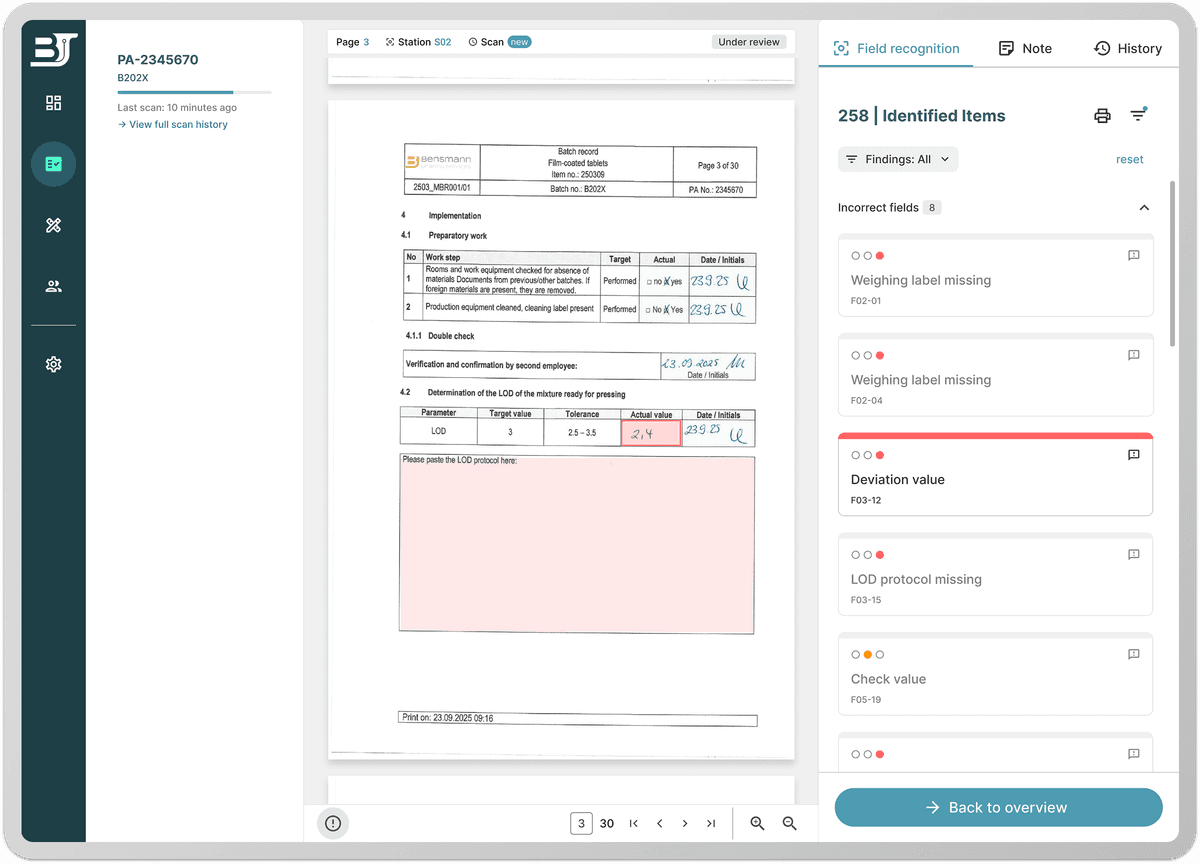
The automated documentation check follows defined plausibility rules - It detects missing or incorrect entries in documentation and checks all pages, entries and signatures for completeness.
Structured Assignment of Critical Content
The system identifies anomalies already during ongoing production – e.g. during partial batch record reviews at shift end. Immediate error correction before QA review - fewer feedback loops.
Flagged:
- missing entries
- inconsistencies
- formal or structural discrepancies
- defined rule violations
- affected location and process step
BR Documentation
An error report for each batch documentation provides information on completeness and correctness and enables targeted error correction by qualified employees.
Digital Availability
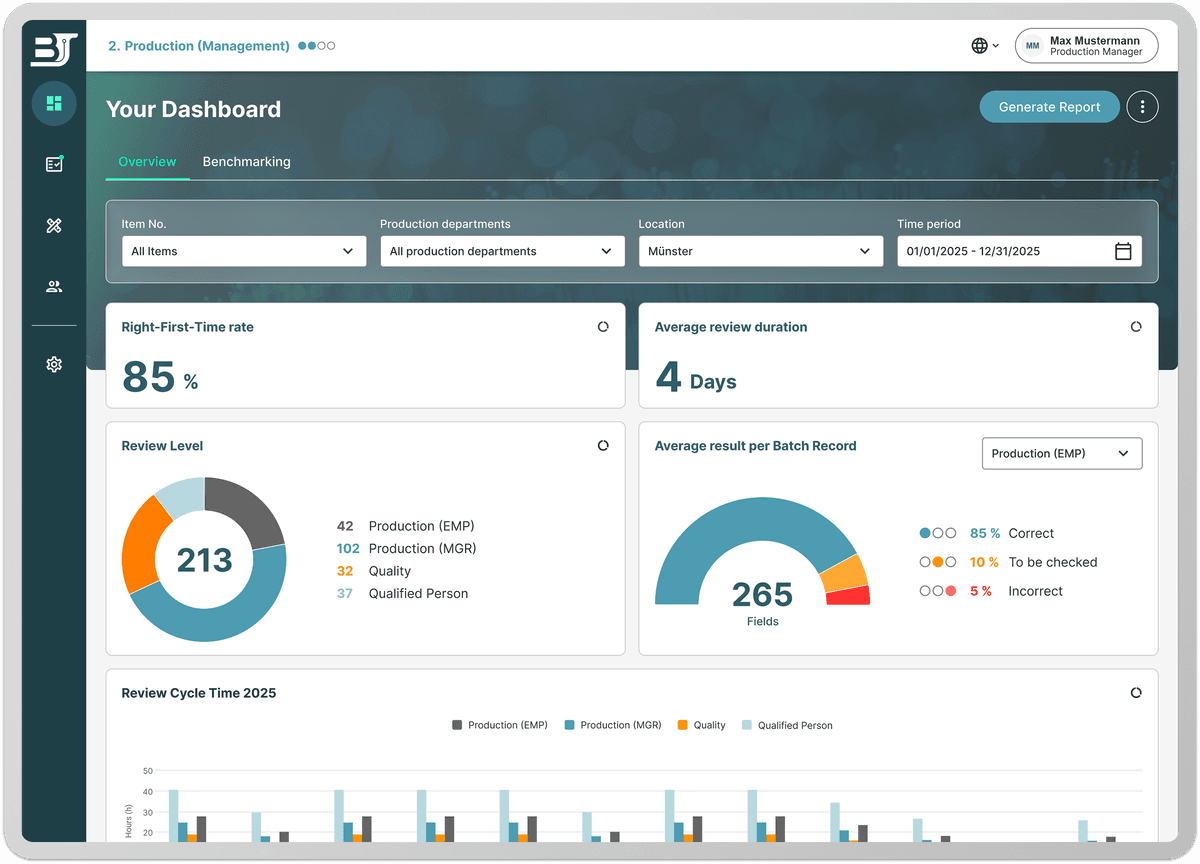
Digitised document capture with company-wide availability and transparent status visibility for production, quality assurance, qualified person and management.
Visible data:
- Status of each batch
- Anomalies in batch documentation
- Cycle times
- Resource bottlenecks
Transparency and cross-site Benchmark
Transparency through data about the quality of batch documentation and its review processes is the prerequisite for optimisations and robust processes at production sites.
Data-based objective decisions
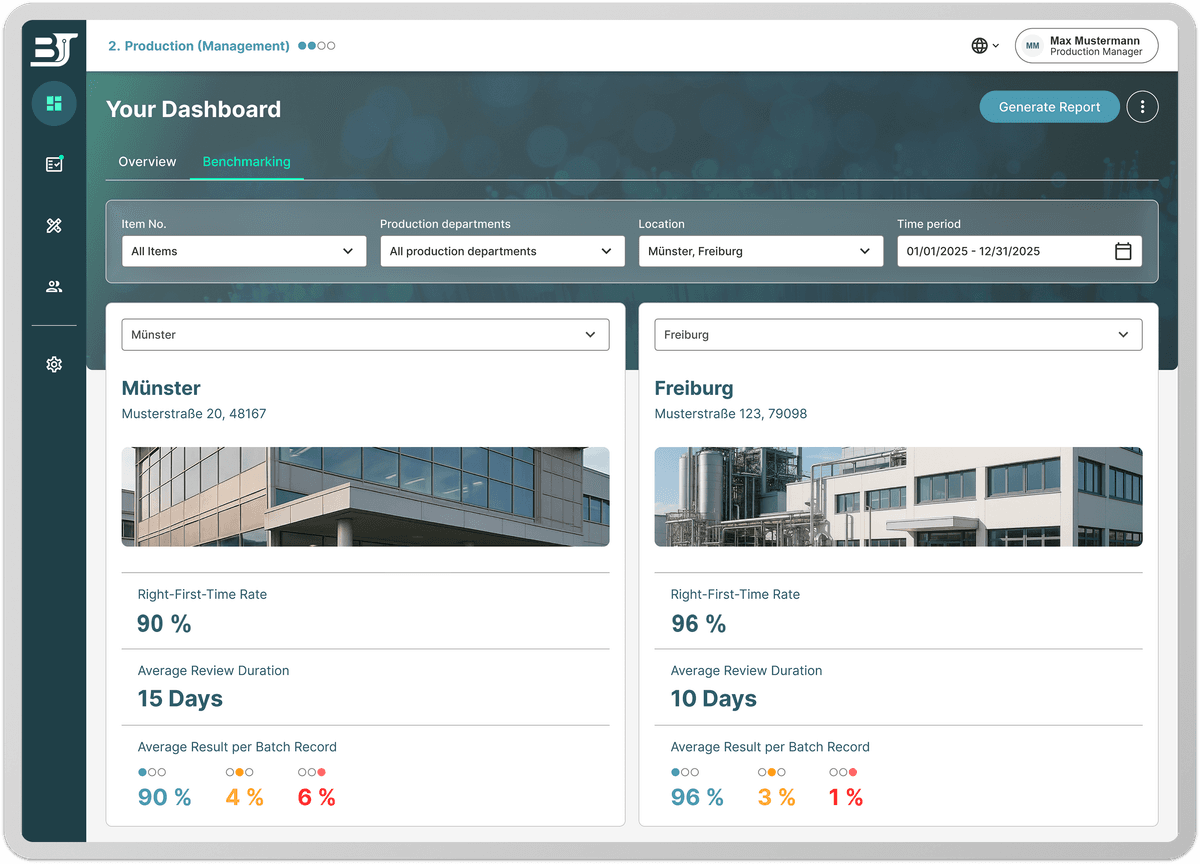
Process efficiency is based on data transparency. BatchSense creates the foundation for process optimisation of batch documentation review. Visible at each site and across sites for a constructive group-wide benchmark.
Visible data:
- Cycle times per workflow phase
- Batch Record Right First Time
Workflow
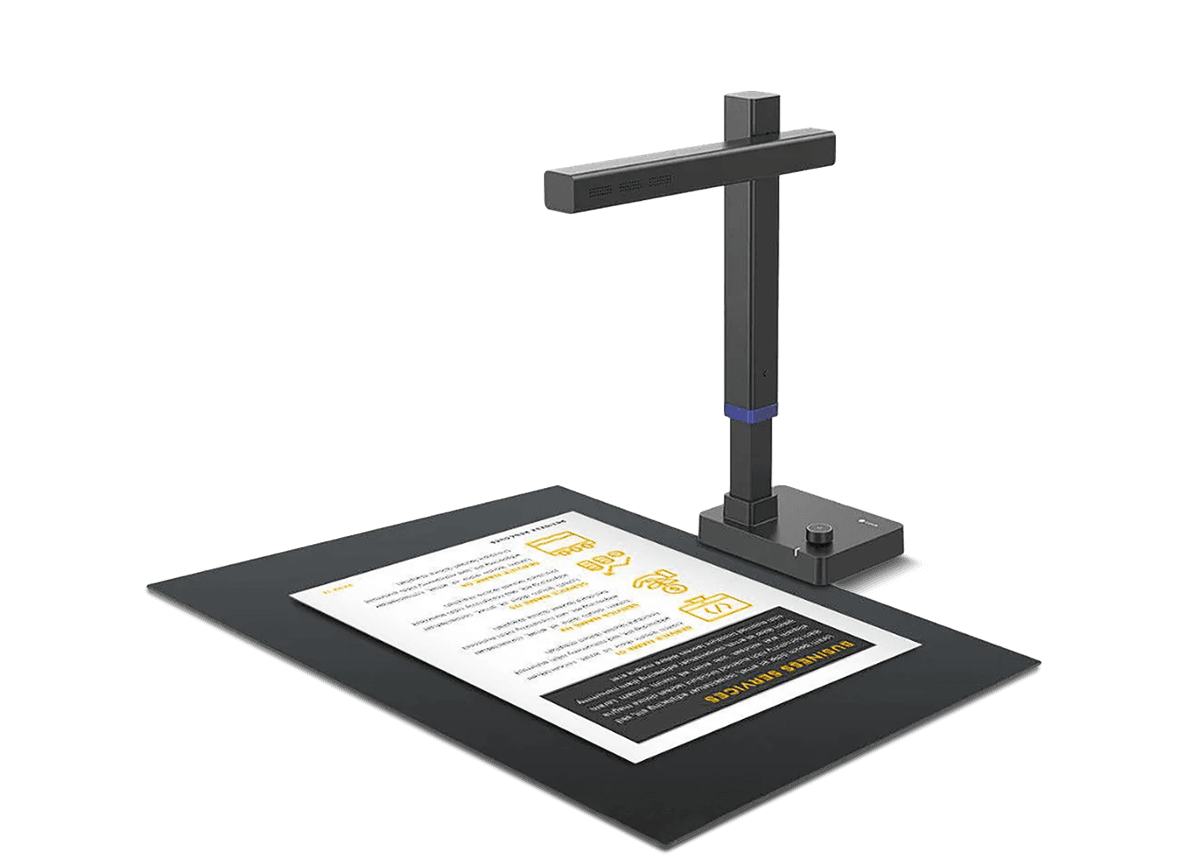
BatchSense integrates seamlessly into existing documentation workflows: Through simple scanning, handwritten batch documentation becomes a digitised review process in 4 phases:
Phase 0
Training and optional staff in production
- Informal review, no KPI data collection
- Staff training
- On-site support for employees
Phase 1
Production - Team Leader / Shift Leader
- Start workflow
- KPI data collection: Batch Record Right First Time, processing time / lead time
- Review in the production area
- Correction/amendment of batch record entries if required
- Start deviation management if required
- Confirmation of Phase 1 completion, initiating Phase 2
Phase 2
Production - Manufacturing Management
- KPI data collection: Return to production, processing time / lead time
- Review by production/manufacturing management
- Start deviation management if required
- Confirmation of Phase 2 completion, initiating Phase 3
Phase 3
Quality Assurance QA
- KPI data collection: Return to production/manufacturing management, processing time / lead time
- Review by quality assurance, preparation of Batch Record Review
- Start deviation management if required
- Confirmation of Phase 3 completion, initiating Phase 4
Phase 4
Qualified Person QP
- KPI data collection: Return to quality assurance, processing time / lead time
- Conducting Batch Record Review
- Batch certification and completion of the workflow in BatchSense
Integration & Implementation
Here you can learn how BatchSense is applied and integrated into existing systems.
Intuitive Application
Shop floor-ready process support through intuitive operation, understandable guidance and clear action recommendations.
Intuitive User Interface
Simple navigation, clear user guidance and structured workflow enable use directly in the production environment – without extensive training or process interruption.
Understandable Error Reports
Findings are documented page-specifically and traceably – with clear reference to the affected location in the batch record.
Clear Action Recommendations
Concrete guidance shows where corrections are needed so that rework can be targeted and carried out promptly in the manufacturing process.
Uncomplicated Integration
BatchSense adapts to your existing documentation logic – not the other way around. Digital efficiency without system redesign: Ready in days & your processes remain intact.
Ready immediately
BatchSense can be used productively within a few days – production workflows, documentation structure and procedural instructions remain unchanged.
No EBR mega-project
Unlike the introduction of electronic batch records, BatchSense requires no process redesign, no extensive validation of the complete system and no extensive training programme.
Transparency & Skill Building
Transparent KPI support
BatchSense makes review times, error rates and “Batch Record Right First Time” rates measurable and comparable – department-specific and site-related, prepared for use across a corporate group. Systematic pre-screening is consistent and continuous, keeping assessments reproducible.
Measurable process quality
Structured pre-screening creates reliable data on documentation quality of produced batches, which is also indicative of the robustness of manufacturing processes. Trends can be tracked, weaknesses identified and improvements, e.g. training and other CAPA measures, targeted.
Efficient onboarding & scaling
Structured onboarding and a train-the-trainer approach enable rapid internal competence building. Companies can operate the system independently and expand gradually.
Quality & Compliance
Learn how BatchSense supports quality, security and compliance in batch documentation.
Quality Assurance
Preventive error detection increases the qualitative completeness of paper-based batch documentation before it leads to returns, rework and unnecessary coordination loops during QA review. Despite GMP and GAMP 5 compliant implementation, the professional decision remains with staff in production, quality assurance and with Qualified Persons (Human-in-the-Loop).
GMP-, GAMP 5-compliant Design
The basis is a documented risk analysis based on the Intended Use – in the sense of realistic CSV practice. Review criteria, system logic and review history are documented and auditable. The system remains explainable, reproducible and controllable.
The system architecture and implementation are guided by the EU GMP Guidelines, Annex 11, the GAMP 5 Guide, Data Integrity Principles and the risk-based approach according to ICH Q9.
Revalidation & Lifecycle Management
System changes, configuration adjustments and developments are documented and traceably managed according to Change Control procedures. For relevant changes, risk-based validation is carried out within the defined CSV strategy. This keeps the system controllable and auditable throughout its entire lifecycle.
Standardised Review Basis
BatchSense creates a documented, standardised review basis that consistently evaluates formal completeness according to defined plausibility rules and creates a robust basis for “Batch Record Right-First-Time”. Findings become comparable across batches, teams and sites. Automated and reproducible results enable targeted processing of structured findings by QA. Returns and rework are reduced while reviews become plannable and deliver comparable KPIs.
Responsibility
Assessments and final release for market distribution remain with humans, but with a significantly better information basis. BatchSense supports batch record review with systematic guidance, without replacing decisions, and the process maintains Human-in-the-Loop (per Annex 16, EU GMP Guide).
Security & Compliance
BatchSense sets the highest standards for security and compliance – particularly in the use of AI technologies and the protection of sensitive data.
Handling AI
Controlled System Logic
BatchSense is designed as an industrial assistance system – not as generative AI. The system logic is rule-based, documented and reproducible (plausibility rules). It makes no autonomous decisions, no free assessments and performs no independent releases. Expert assessment remains with humans (Human-in-the-Loop). BatchSense is designed as a supporting quality tool.
This avoids uncontrolled “hallucinations”, intransparent assessment logic or untraceable text interpretations. Results are based on documented rules – not on probabilistic decision models without reference or an autonomous decision system.
Conformity with the EU AI Regulation
BatchSense is developed and operated in consideration of the requirements of the EU AI Regulation (AI Act). This means in particular:
- Clearly defined Intended Use
- Documented system logic
- Transparent functionality
- Risk-based system design
- Traceable results
System Transparency
For traceable system logic and review processes in the handling of AI, BatchSense uses various aspects to ensure transparency. Review criteria are documented, findings are page-specifically traceable, review histories are auditable. Thus the system remains explainable and controllable, even in audits.
Data Protection
Data Hosting in the EU
All data is processed and stored in an EU-based cloud infrastructure. In compliance with GDPR with clear contractual regulations for data processing, hosts within the European Union are used. Access rights are role-based defined and technically secured with strict prohibition of transferring sensitive production data to third countries.
Information Security & Access Control
BatchSense is designed to process production and quality data in a structured manner – not to reuse them externally. This is achieved through:
- Role- and permission-based access systems
- Traceable logging of system activities
- Documented change and version history
- Clear separation between system logic and user decisions